Free 1894 Dime Value Calculator
Select your coin's mint mark, condition, and any errors below to get an instant value estimate.
If you're not sure about the mint mark or condition yet, try the 1894 Barber Dime Coin Value Checker — it's a free AI tool that estimates value from coin photos with no signup required.
Describe Your 1894 Dime for a Detailed Assessment
Not sure how to use the calculator? Describe what you see on your coin in plain language and we'll interpret it for you.
Mention these things if you can
- Mint mark (letter below wreath on reverse)
- How many letters of LIBERTY are visible
- Does the coin have original shine/luster?
- Any damage, cleaning, or unusual marks
Also helpful
- Raised lines, cracks, or bubbles on the surface
- Missing sections at the coin's edge
- Coin weight (should be 2.50g)
- Any professional certification (PCGS / NGC)
Skipped the calculator? Answer three quick questions — mint mark, condition, errors — and get your value instantly.
Use the Calculator →Do You Have the Legendary 1894-S Barber Dime?
The 1894-S is one of America's "Big Three" coin rarities alongside the 1804 dollar and 1913 Liberty nickel. Only 9 examples are known. Use this checker to assess your coin's chance of being one of them.
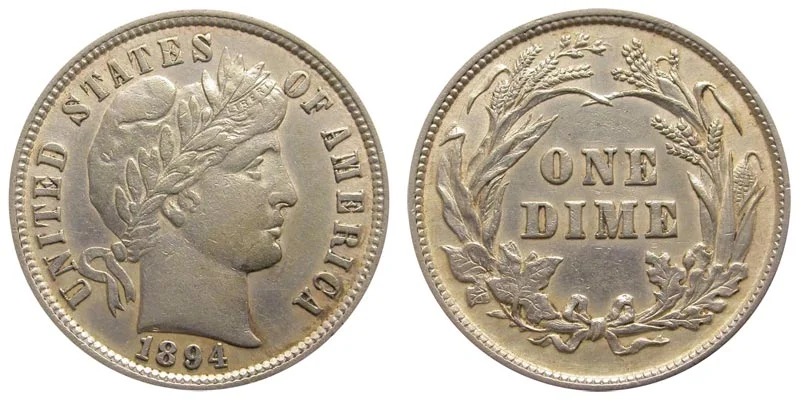
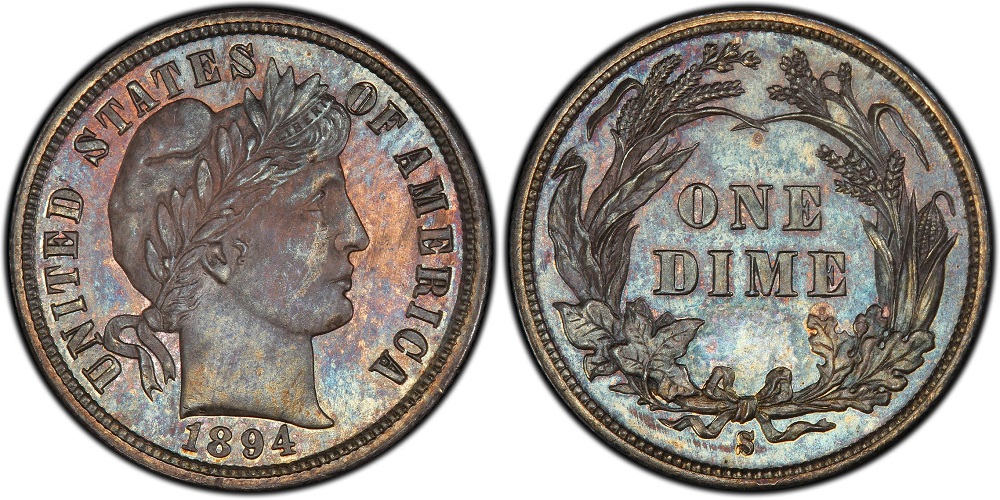
⚪ Common 1894 Dime (Philadelphia or New Orleans)
- No mint mark, or an O below the wreath
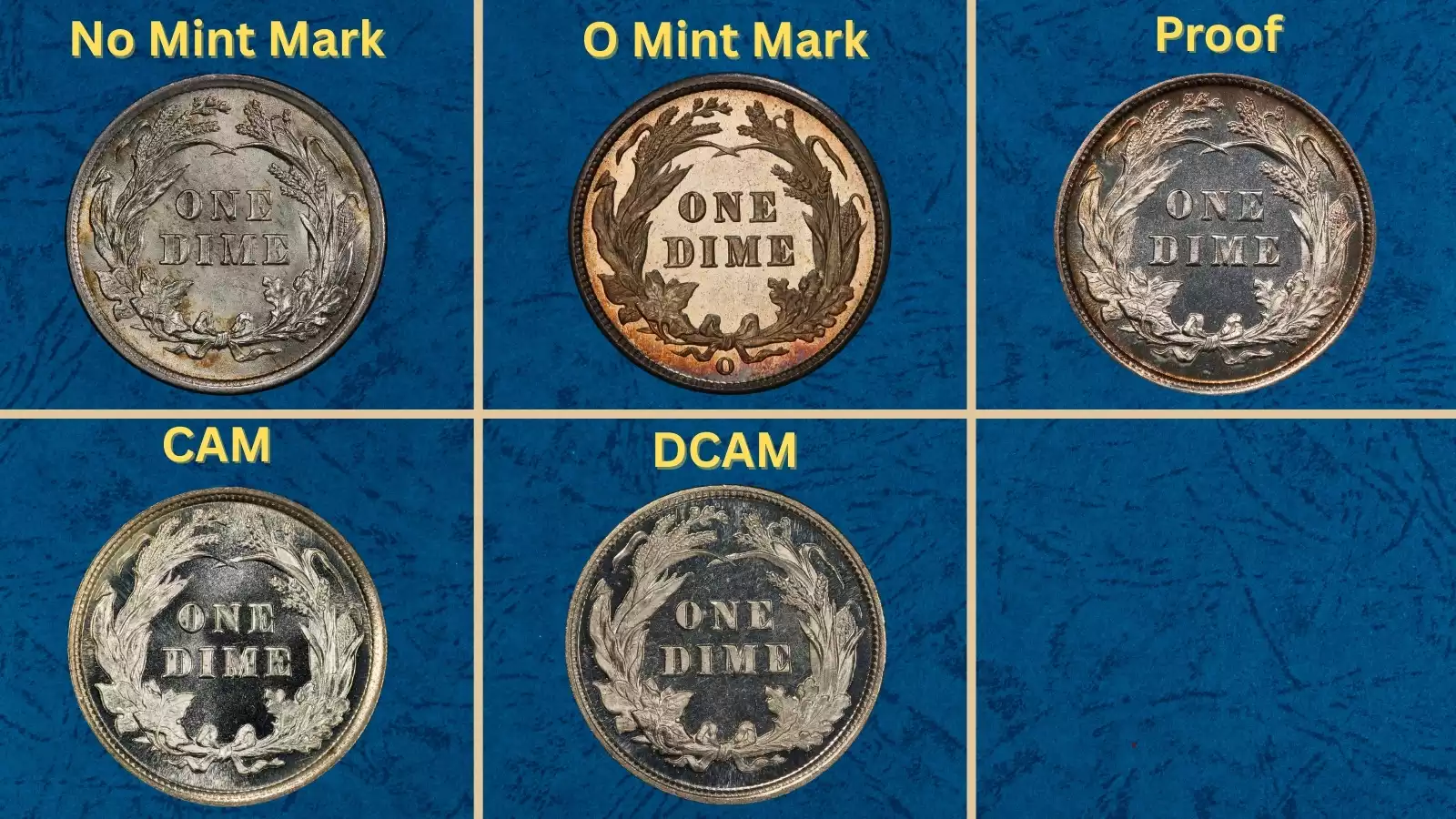
- Reverse wreath surrounds ONE DIME with NO mint mark or O visible
- Worth $25–$500+ depending on condition
- Millions produced between both mints combined
🔴 Rare 1894-S Barber Dime
- Small S mint mark visible below the wreath on the reverse
- Mirror-like proof surfaces — not the typical satin mint look
- Only 24 ever struck — 9 believed to survive today
- Every known example has a documented ownership history (pedigree)
Four-Point Identification Checklist
1894 Dime Value Chart at a Glance
All values are market estimates based on PCGS and Heritage auction data. For a complete in-depth illustrated 1894 Barber dime identification guide and breakdown of every grade point, use the linked resource. Signature variety row highlighted in gold; the legendary 1894-S row in red.
| Variety | Worn (G–VG) | Circulated (F–XF) | Uncirculated (AU–MS63) | Gem MS (MS64+) |
|---|---|---|---|---|
| 1894-P (No Mint Mark) Common | $25 – $70 | $130 – $210 | $240 – $520 | $640 – $21,150+ |
| 1894-O (New Orleans) Semi-Key ⭐ | $78 – $110 | $230 – $500 | $780 – $1,840 | $3,000 – $36,800+ |
| 1894 Proof (Philadelphia) Rare | — | — | $320 – $620 | $750 – $23,000+ |
| 1894-S (San Francisco) Big Three Rarity 🔴 | Only 9 known — last sold for $2,160,000 (Heritage, Jan 2025) — submit to PCGS immediately | |||
📱 CoinKnow gives you a fast on-the-go estimate for any Barber dime by identifying your coin's grade and variety from a photo — a coin identifier and value app.
Navigate This Guide
Jump to any section:
The Valuable 1894 Barber Dime Errors (Complete Guide)
Beyond the legendary 1894-S rarity, the regular 1894 Philadelphia and New Orleans dimes carry minting errors that push values well above standard catalog prices. These mechanical mistakes occurred at the mint during production and were not caught before the coins entered circulation. Each error type below is confirmed documented for the Barber dime series — use a 10× loupe and good raking light to inspect your coin carefully.
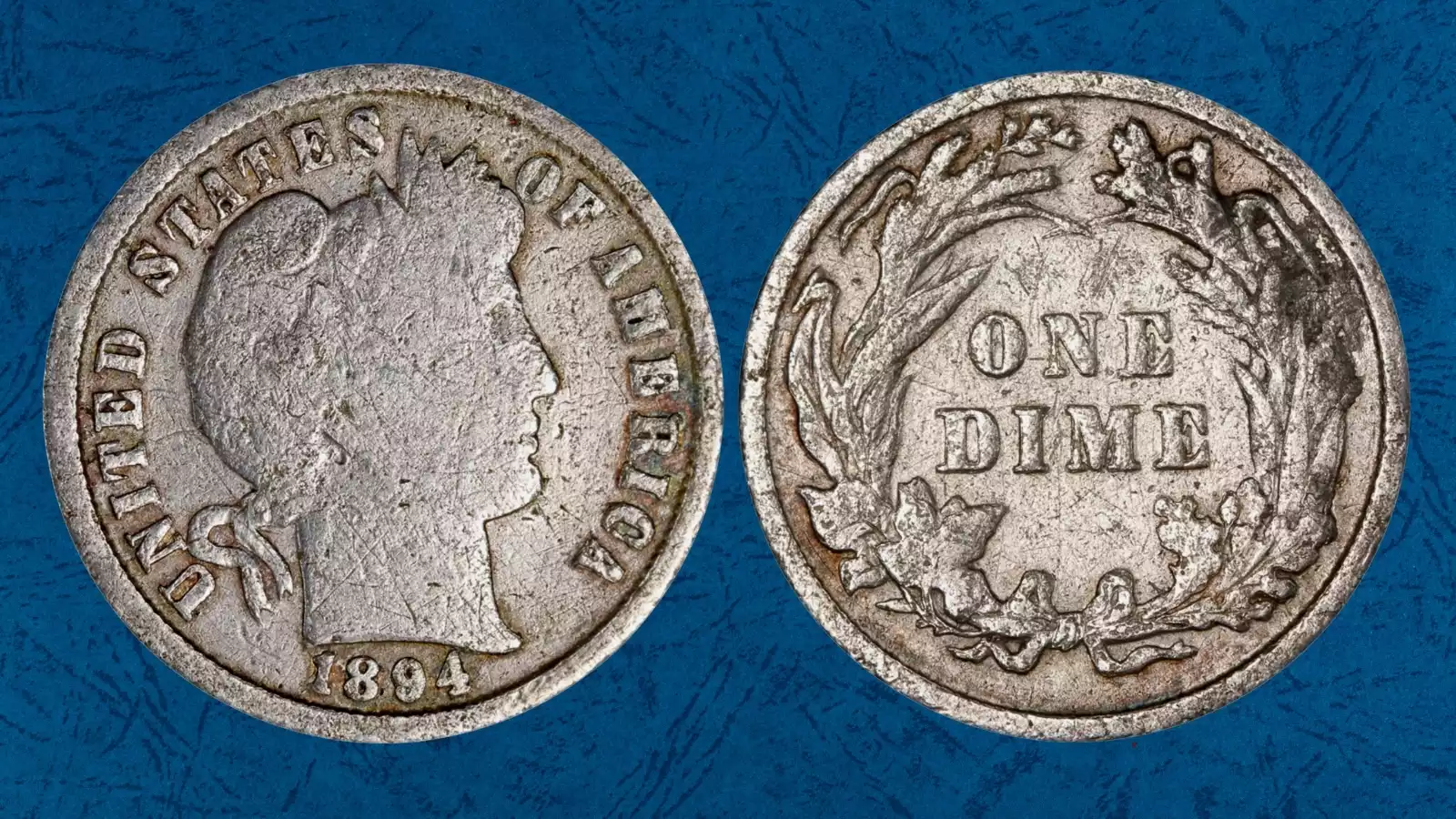
Die Crack Error
BEST KEPT SECRET $50 – $300+As a die is used to strike thousands of coins, it develops tiny stress fractures from repeated impact with hard planchets. These cracks transfer to each coin struck afterward as thin raised lines of metal running across the design surface.
On the 1894 Barber dime, die cracks most commonly appear along the rim, through the date numerals, or crossing Liberty's portrait. A crack running through a key design area — particularly the date or the word LIBERTY — is considered more desirable by error specialists. The more dramatic and well-defined the crack, the greater the premium collectors will pay.
Minor die crack examples are the most accessible error coins for beginning collectors in the Barber dime series. A thin crack near the rim adds modest value, while major through-design cracks on choice circulated or better examples attract dedicated error collectors willing to pay strong premiums above standard catalog prices.
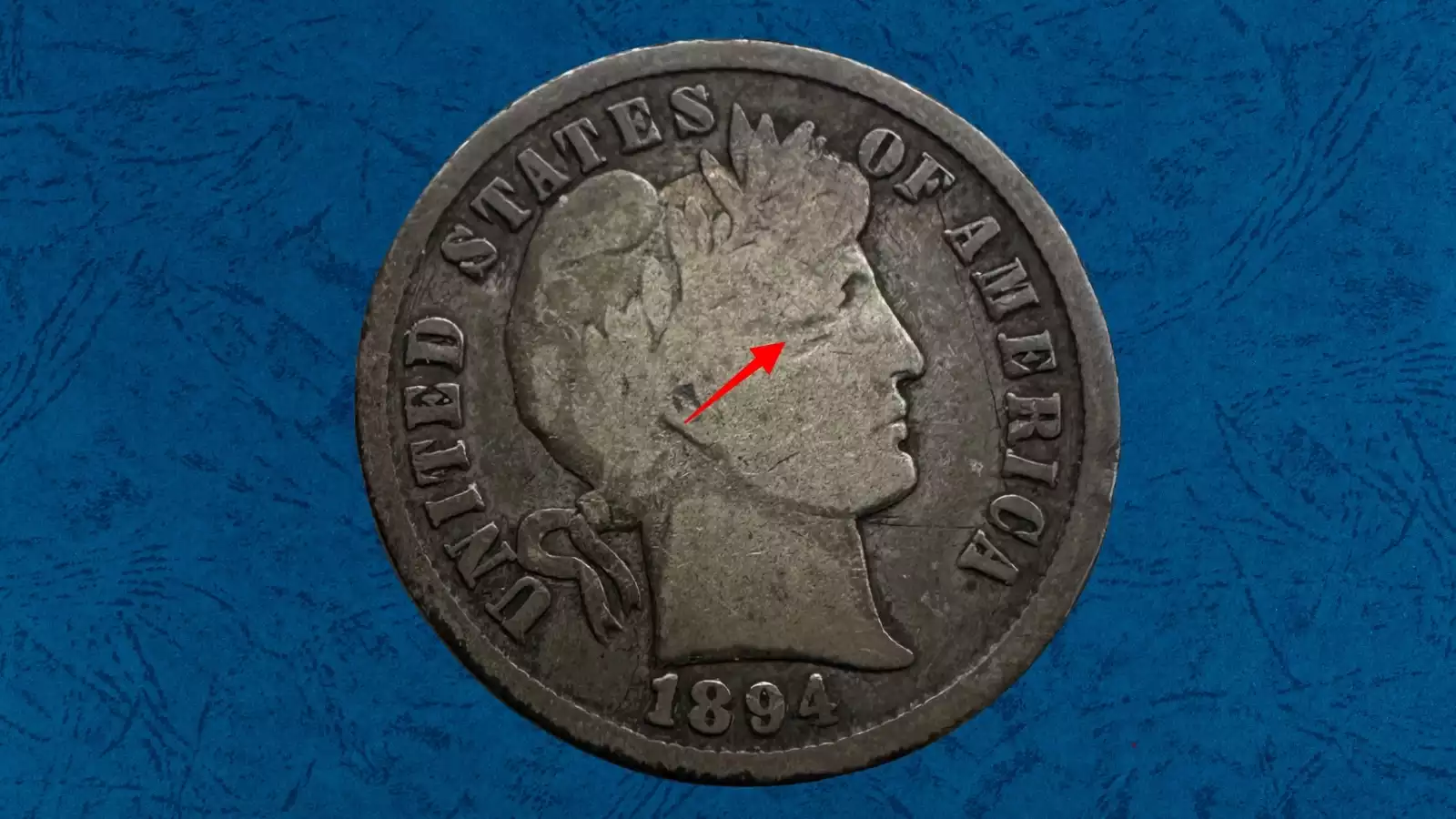
Struck-Through Grease Error
MOST ACCESSIBLE $75 – $500+Struck-through errors occur when a foreign substance — most often hardened grease or debris — fills a portion of the die's recessed design before striking. The planchet metal cannot flow into grease-filled areas, producing a coin where part of the design is weak, flat, or entirely absent while the surrounding areas remain fully detailed.
On the 1894 Barber dime, struck-through grease errors most dramatically manifest as partial or missing letters in LIBERTY on the headband, flat spots in the reverse wreath, or obliterated date numerals. Because LIBERTY visibility is a key grading criterion for Barber dimes, a struck-through coin with missing headband letters can appear lower grade than it actually is — making attribution important before sale.
The premium commanded by a struck-through error scales with its visual drama. Small spots add a modest increment, while a coin with several numerals of the date missing due to a large grease plug can reach several hundred dollars even in a circulated grade, because such dramatic examples are rarely encountered in the series.
Lamination Error
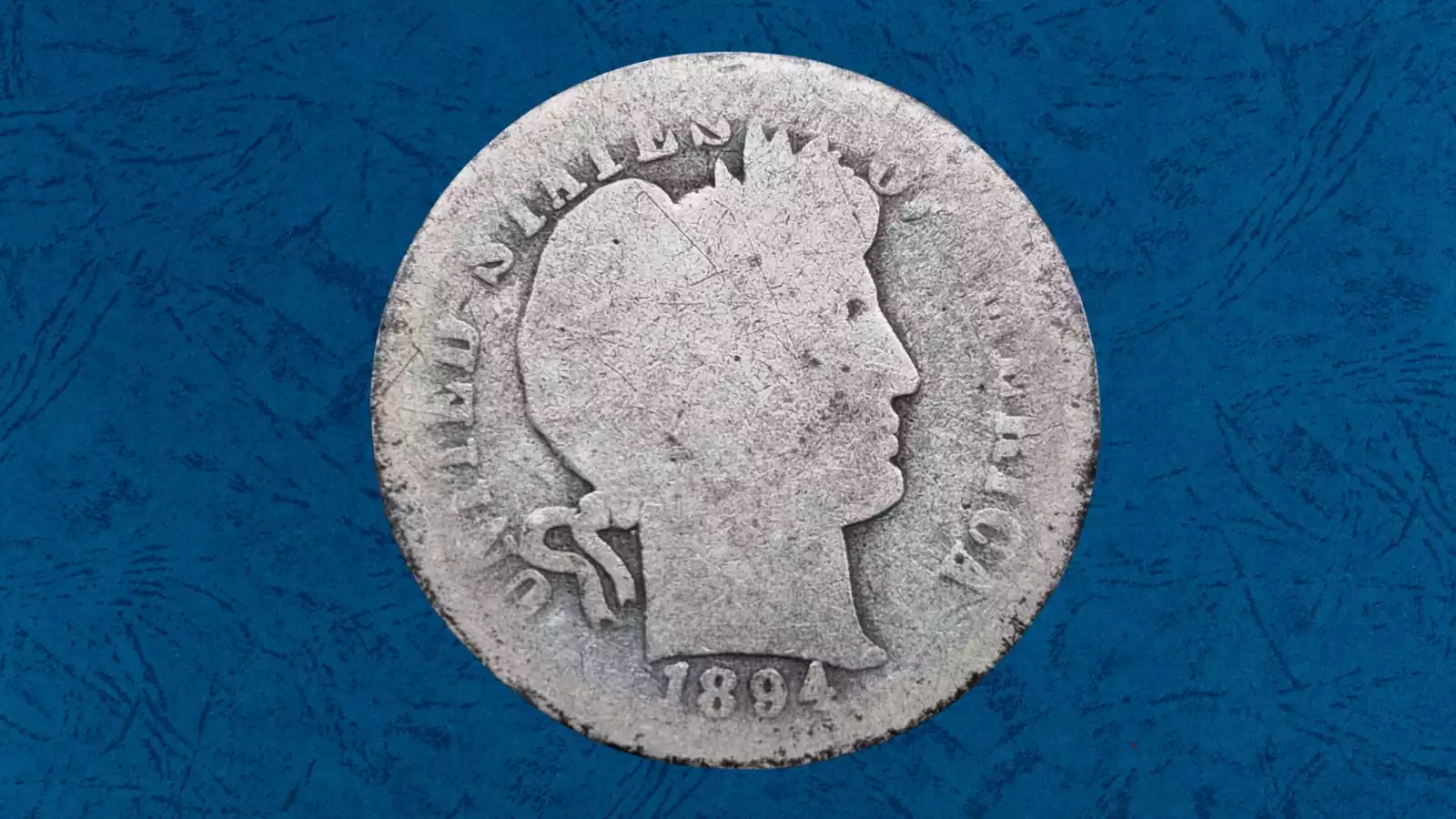
RAREST MINT ERROR $100 – $500+Lamination errors result from impurities or gas pockets within the silver-copper alloy planchet itself. These subsurface defects cause the metal to separate in layers — either before striking, producing a pre-strike lamination crack visible as a hairline split in the blank, or during striking, where the pressure of the dies forces the defect to the surface as a raised or detached flap of metal.
A lamination error on a Barber dime can be distinguished from post-mint damage because the separation strictly follows the metal's natural grain structure, running parallel to the coin's face rather than gouging randomly into the surface. Under magnification, the edges of a true lamination show a clean, planar separation rather than the torn or bent edges of mechanical damage.
Large or dramatic laminations — particularly those crossing the portrait or completely removing a flap over the date area — are the most prized by error specialists. These represent genuine manufacturing defects in the planchet metal supply that escaped quality control at the mint, making them authentic historical artifacts of 19th-century silver coin production.
Clipped Planchet Error
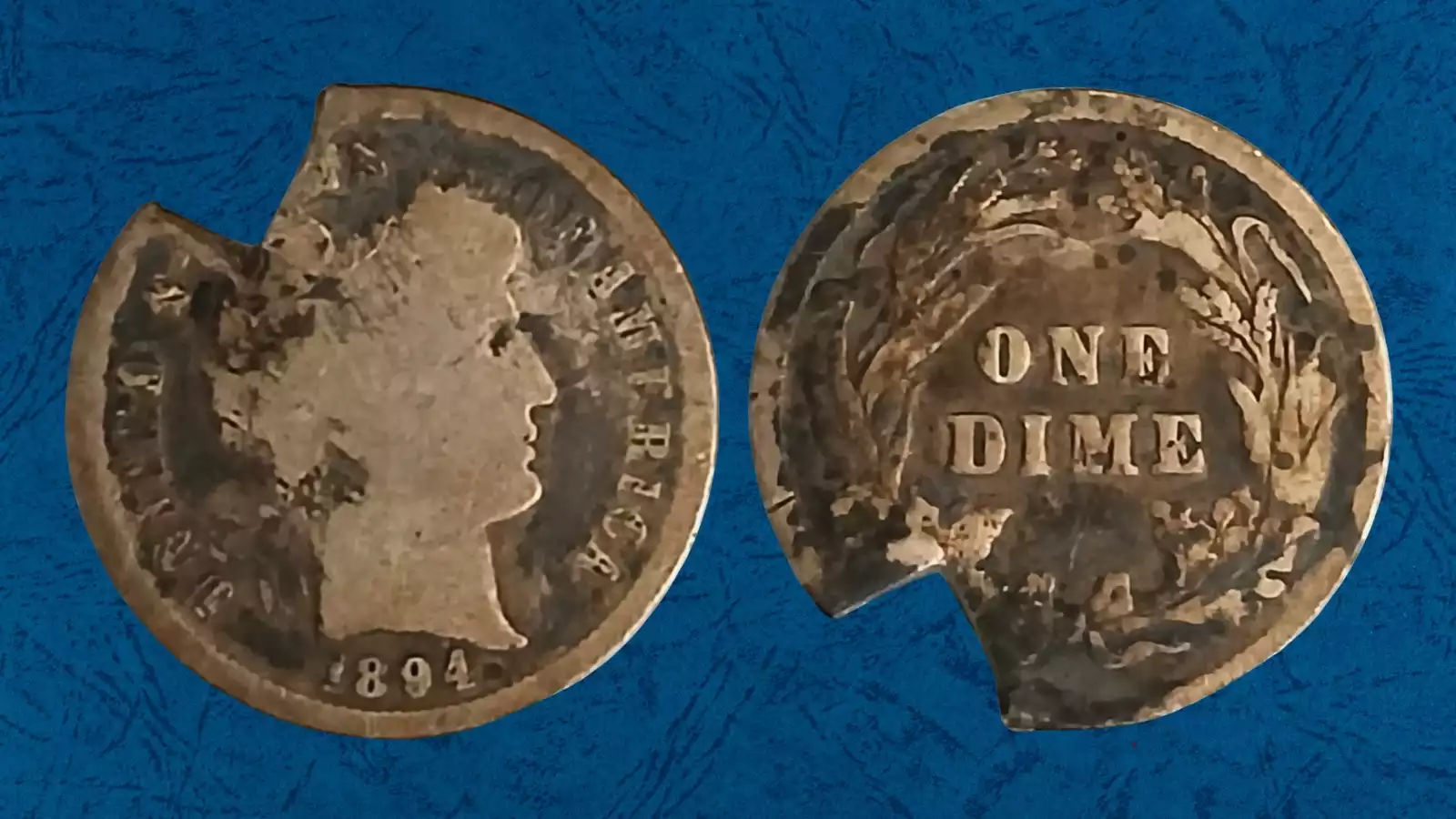
MOST DRAMATIC $150 – $800+Clipped planchet errors occur during the blanking process at the planchet preparation facility. When the punch that cuts circular coin blanks from a silver strip overlaps a hole left by a previously punched blank, the resulting planchet is missing a curved section along one edge. The coin struck from this defective blank carries the clip as a permanent feature.
The diagnostic signature of a genuine curved clip is the Blakesley effect — a corresponding area of weakness or missing rim detail on the opposite side of the coin from the clip. This occurs because the collar die cannot fully contain the planchet metal on the clipped side, and metal flow compensates by creating a thin spot directly across the coin. Post-mint damage that merely looks like a clip will not show the Blakesley effect.
Clipped planchet 1894 Barber dimes are among the most visually dramatic errors in the series. A large curved clip removing 10% or more of the coin is immediately obvious even to non-specialists and commands strong interest at general coin shows and error coin auctions alike — far beyond what simple die cracks or grease strikes typically generate.
Think you've spotted one of these errors? Run it through the calculator to get a specific value estimate for your mint mark, condition, and error combination.
Calculate Error Value →1894 Barber Dime Mintage & Survival Data
| Issue | Mint | Circulation Strike Mintage | Proof Mintage | Approx. G-4 Value |
|---|---|---|---|---|
| 1894 (No Mint Mark) | Philadelphia | 1,330,000 | 972 | ~$25–$50 |
| 1894-O | New Orleans | 720,000 | — | ~$78–$110 |
| 1894-S | San Francisco | — | 24 (only 9 survive) | Millions — submit to PCGS |
| 1894 Totals | All Mints | 2,050,000 (circulation) | 996 (proofs) | — |
Source: Coinmintages.com, PCGS CoinFacts, CoinValues.com · All survival estimates are approximations — no comprehensive census of circulated examples exists.
How to Grade Your 1894 Barber Dime
Worn — Good to Very Good (G-4 to VG-10)
Heavy circulation wear flattens most design detail. The rim is distinct but merges with some legend letters. Liberty's portrait is an outline. The date is fully legible. LIBERTY on the headband has three or fewer letters visible. Worth $25–$110 depending on mint and specific grade.
Circulated — Fine to Extremely Fine (F-12 to XF-45)
In Fine condition all letters of LIBERTY are present though some may be weak. Hair ribbons show definition in Very Fine. In Extremely Fine only slight flatness remains on the highest hair points and cheekbone — all design elements remain crisp with minor softness. Most original luster is gone. Worth $130–$230+ for Philadelphia issues.
Uncirculated — About Uncirculated (AU-50 to AU-58)
Only trace wear is visible on Liberty's cheekbone and the very tips of her hair — less than 25% of luster is disturbed. Most original cartwheel luster remains intact when the coin is tilted under a single light source. Extremely popular grade for the 1894-O since high-grade survivors are genuinely scarce. Worth $240–$1,840+ depending on mint.
Gem Mint State — MS-64 and Above
No wear whatsoever. Full original mint luster with a cartwheel shimmer across the entire surface. Eye appeal is paramount at this level — contact marks, strikes, and toning all affect grade. The 1894-P tops at MS68 (PCGS; sold $21,150 in 2017). Prooflike designation adds an additional premium for mirrors-bright examples of the regular Philadelphia issue.
🔬 CoinKnow lets you cross-reference your coin against thousands of graded examples to match condition tiers before committing to a professional grading submission — a coin identifier and value app.
Where to Sell Your Valuable 1894 Barber Dime
The right venue depends on how rare your coin is. A circulated Philadelphia dime sells easily anywhere; a potential 1894-S requires auction house specialists.
🏆 Heritage Auctions
The best venue for the 1894-O in AU or better, any proof issues, or any suspected 1894-S. Heritage's numismatic specialists know this series deeply and have direct access to the high-end collector market that pays top dollar for key date Barber coinage. Expect 15–20% buyer's premium.
📦 eBay
Solid option for circulated 1894-P dimes in worn to Fine condition. Browse recently sold prices for 1894 Barber dimes in MS condition and below to price your listing competitively. Raw (uncertified) coins sell more easily here at lower grades; certified coins attract more serious buyers at mid grades.
🏪 Local Coin Shop (LCS)
Best for quick, hassle-free sales of circulated examples. Expect 40–60% of retail value since dealers need a margin. Bring comparable eBay sold listings to negotiate. An honest local shop is also a good first stop for a free verbal opinion before deciding whether to pursue formal grading or auction.
💬 Reddit r/Coins4Sale
Active community of collectors who buy directly from sellers, cutting out dealer margins. Best for mid-range circulated to About Uncirculated examples where you know the grade. Provide clear photos and a PCGS price reference. Transactions typically use PayPal G&S. Always verify a buyer's feedback history before shipping.
Frequently Asked Questions — 1894 Dime Value
How much is a 1894 dime worth?
A 1894 Philadelphia Barber dime in Good (G-4) condition is worth around $25–$50. In Fine condition expect $130–$150, while About Uncirculated examples fetch $240–$340. Gem uncirculated specimens (MS-65+) can reach $1,000 or more. The rare 1894-O dime commands significantly higher premiums at every grade, and the 1894-S is one of the most valuable coins in all of American numismatics.
Why is the 1894-S dime so valuable?
Only 24 examples were struck at San Francisco in 1894, reportedly to balance a mint bullion account. Superintendent John Daggett gave several to banker friends and three to his daughter Hallie — who spent one on ice cream. Today only about nine examples are known to survive, making the 1894-S one of the rarest and most coveted U.S. coins. The finest certified example sold for $2,160,000 at Heritage Auctions in January 2025.
How many 1894-S dimes are known to exist?
Numismatic experts and PCGS believe approximately nine examples of the 1894-S Barber dime survive today, though some estimates put the number at eight. Of those nine, only three have been described as gem quality (Proof-65 or better). The coin regularly appears on lists of the "Big Three" American rarities alongside the 1804 silver dollar and the 1913 Liberty nickel.
What is the 1894-O dime worth?
The 1894-O Barber dime was struck at New Orleans with a mintage of only 720,000 — the lowest circulation-strike mintage of the 1894 Barber dime year. In Good-4 condition it starts at roughly $55–$92. In Fine condition expect $230–$290. About Uncirculated examples trade in the $780–$1,600 range, and choice uncirculated specimens can command several thousand dollars from collectors.
How do I tell if my 1894 dime is real?
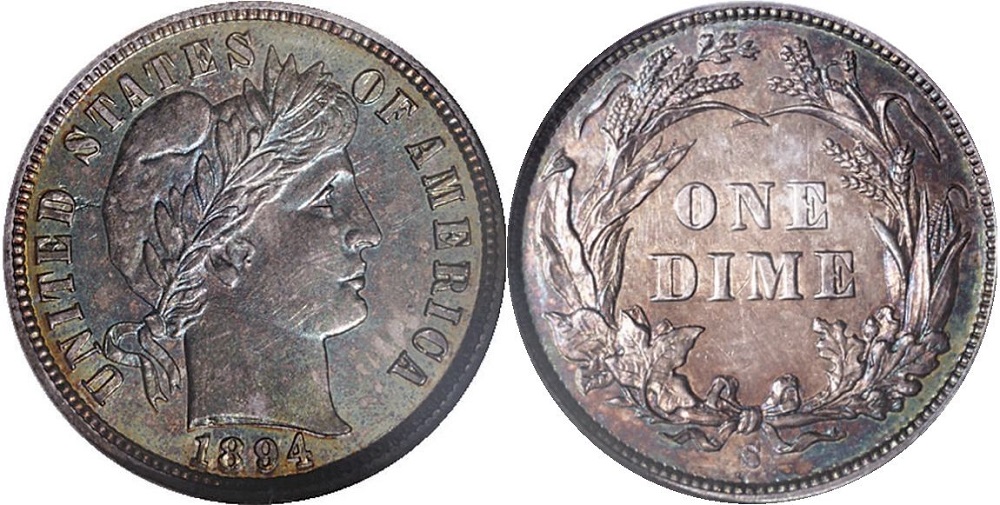
Authentic 1894 Barber dimes weigh 2.50 grams, measure 17.9mm in diameter, and are composed of 90% silver and 10% copper. The obverse shows Liberty wearing a laureate and ribbon cap, with LIBERTY inscribed on the headband. Look for sharp reeding on the edge and a full wreath on the reverse. Any coin claiming to be a 1894-S should be submitted to PCGS or NGC for authentication — counterfeits of this rarity do exist.
What does a 1894 dime look like?
The 1894 Barber dime features Liberty facing right on the obverse, wearing a laureate and ribbon cap with LIBERTY on the headband and thirteen stars surrounding the portrait. The reverse features a wreath of corn, wheat, cotton, and tobacco surrounding the denomination ONE DIME, with UNITED STATES OF AMERICA above. A mint mark, when present, appears below the wreath on the reverse. Designer was Chief Engraver Charles E. Barber.
How can I tell the grade of my 1894 Barber dime?
Focus on Liberty's headband: in Fine condition at least three letters of LIBERTY are visible; in Very Fine all letters are visible though some may be weak. In Extremely Fine only slight wear shows on the hair tips and cheek. An About Uncirculated coin retains at least 75% of its original luster with only trace wear on the cheekbone and highest hair points. Mint State coins show no wear whatsoever with full luster intact.
What errors exist on 1894 Barber dimes?
Known error types on 1894 Barber dimes include die crack errors (raised lines crossing the design), struck-through errors (grease or debris filling die recesses leaving weak areas), lamination errors (where the planchet metal peels or flakes), clipped planchet errors (missing sections from the coin's edge), and broadstrike or uneven rim errors from collar die failures. These errors add modest to significant premiums depending on size, location, and severity.
Where is the mint mark on a 1894 dime?
The mint mark on 1894 Barber dimes is located on the reverse side of the coin, below the wreath and above the O in ONE DIME. Philadelphia coins carry no mint mark. New Orleans coins show a small O, and the legendary San Francisco examples bear an S. The mint mark is small and can be difficult to read on heavily worn examples — use a 5× to 10× loupe for best visibility.
Should I clean my 1894 dime before selling?
Never clean your 1894 Barber dime. Cleaning — whether with polish, abrasives, or even soap and water — removes original luster and creates hairline scratches that professional graders can easily detect. A cleaned coin is heavily discounted and may be designated "details" grade by PCGS or NGC, drastically reducing its value. Natural toning, even dark toning, is considered original and preferable to a bright but cleaned surface.
Ready to Find Out What Your 1894 Dime Is Worth?
Use the free calculator — takes under 60 seconds. No signup, no email, no cost.
Calculate My Coin's Value →